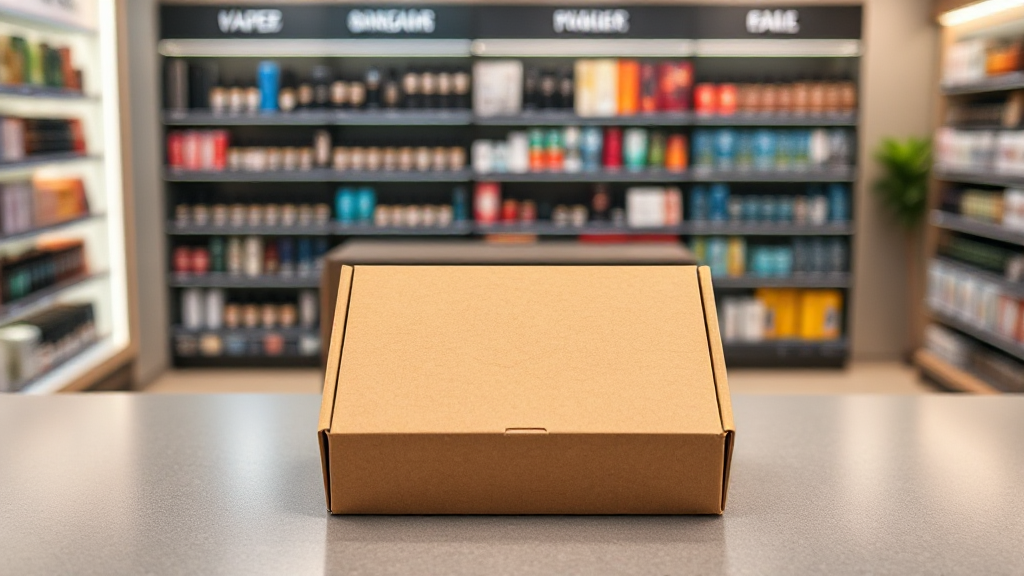
Where Vape Delivery Orders Break: Six Fault Lines
Most late vape deliveries are not mysteries. They are not bad luck, and they are rarely the courier’s fault in the way buyers imagine. When an order for pods or a disposable device fails to arrive in the expected window, the failure almost always sits at one of six identifiable points along the order path. Once you know where those points are, you can read your own tracking updates differently and, more importantly, you can choose a seller whose process is built to survive them. This is a walk down that path, fault line by fault line, written from the perspective of someone who has waited too long for a parcel and wanted to know exactly why.
Fault Line One: The Stock Illusion
The first place an order breaks is the one buyers never see. A product page says a device is available. You pay. Then nothing moves for hours, sometimes a full day, because the item was never physically on a shelf. It was listed from a supplier catalogue, or the last unit sold minutes before you checked out and the inventory count never updated. From the buyer’s side, this looks like silence. The order confirmation arrives, the payment clears, and then the tracking number sits frozen.
The cause is straightforward: the seller is advertising stock they do not hold. This is the single most common reason a same-day promise dies before it begins, because no courier can collect a parcel that does not exist yet. The fix on the buyer’s side is to look for sellers who describe Vape delivery sg as a function of local inventory rather than supplier shipping. When a retailer keeps its own ready stock, the order path starts at a shelf, not at a promise. That one detail changes everything downstream.
Fault Line Two: The Order Window Misread
The second break happens at the moment of checkout, and it is partly the buyer’s own doing. Same-day delivery is almost never a full-day guarantee. It is a cutoff. If the order lands after the cut, it moves to the next working day, regardless of how urgently you need it. Buyers who order at 9 p.m. and expect a parcel by midnight are not being cheated; they are reading the promise wrong.
From the buyer’s side, this fault feels like being ignored. You ordered, you paid for express, and the day passes with no dispatch. The cause is simply that the dispatch window closed before your order entered the queue. The lesson is to treat the cutoff time as the real product. A seller who states it clearly is doing you a favour, because you can then plan around it instead of hoping.
Fault Line Three: The Payment and Verification Snag
This is the quietest fault line and the most frustrating, because nothing looks wrong. The order is placed, the stock is real, the cutoff was met, and yet the parcel does not move. What happened is that the order stalled in a verification step. A payment flagged for review, a mismatched billing detail, or an age-check step that was never completed can hold an order in limbo without any dramatic error message.
From the buyer’s side, this is the “processing” status that never changes. The cause is usually administrative rather than logistical. The recovery here is unglamorous but effective: keep your contact details accurate at checkout and respond quickly if the seller reaches out. A retailer that runs its own local operation tends to catch these snags fast, because the same small team handles payment and dispatch. That is one practical advantage of buying from a dedicated local seller rather than a faceless marketplace listing.
Fault Line Four: The Packaging and Discretion Gap
Not every broken delivery is late. Some are broken in a different way: the parcel arrives, but it announces itself. A box that rattles, a label that describes the contents, a package left in plain view of a shared corridor. For many buyers, discretion is not a nice-to-have; it is the reason they chose delivery in the first place. When that expectation fails, the order has broken even though it technically arrived.
The cause is usually a seller who treats packaging as an afterthought, reusing whatever box is nearest. Discreet packaging is a deliberate process: plain outer wrapping, no product description on the label, and contents secured so nothing shifts. Buyers who care about this should treat it as a search criterion, not a bonus. A seller that advertises lana vape sg as a discreet service is signalling that the last mile is designed, not improvised.
Fault Line Five: The Address and Access Failure
This is the fault line that produces the most anger, because it looks like the courier simply gave up. The rider arrives, cannot get in, cannot reach you, and leaves. The parcel goes back. From the buyer’s side, you were home the whole time. The cause, though, is usually a gap between the address on file and the reality on the ground: a unit number missing, a lobby that requires a call, a condominium with a strict visitor process, or a phone number that rings out.
Delivery in a dense city is unforgiving of small address errors. A rider with a tight route cannot spend ten minutes solving a puzzle at every stop. The practical recovery is to over-specify: tower, stack, unit, and a phone number you will actually answer. If you know your building has a slow lobby process, say so in the order notes. Sellers who run their own riders in Singapore tend to handle this better than third-party networks, because the same person who takes your order can brief the rider on the access quirks.
Fault Line Six: The Handover and Trust Gap
The final fault line sits at the door. The parcel is out, the address is right, the rider is close, and then something goes wrong in the last hundred metres: a handover to the wrong person, a parcel left without confirmation, or a buyer who cannot verify that what arrived is genuine. This is where trust either holds or snaps.
From the buyer’s side, this fault feels like a breach, not a delay. You paid for authentic products and a clean handover, and you got uncertainty. The cause is often a seller who outsources the final step without controlling it. The recovery is to buy from someone who owns the whole chain, from shelf to door. When a retailer describes Singapore lana vape as a single accountable service, it means the same operation that stocks the device also delivers it, so there is no gap for a fault to hide in.
Reading the Path Backwards
If you have had one bad delivery, the useful exercise is not to blame the courier but to walk the path backwards and find which of the six lines snapped. Was the stock real? Was the cutoff met? Did verification stall? Was the packaging discreet? Was the address complete? Was the handover clean? In most failed orders, exactly one of these broke, and the rest of the chain was fine.
That matters because it tells you what to change next time. If your last order died at the stock illusion, you need a seller with real local inventory. If it died at access, you need better address detail. If it died at handover, you need a retailer that controls its own last mile. Buyers who understand the path stop shopping on price alone and start shopping on process.
This is also why the phrase Lana vape same day delivery carries more weight than it first appears. Same-day is not a marketing flourish; it is a claim about the whole chain working. It implies stock on a shelf, a cutoff that is respected, a payment step that does not stall, packaging that is ready, riders who know the city, and a handover that is controlled. When all six fault lines are handled, same-day stops being a lucky outcome and becomes a routine one.
For buyers who want to skip the diagnosis entirely, the shortcut is to choose a seller whose entire model is built around this path. An operation that describes itself as a Singapore vape delivery service, keeps its own ready stock, and handles its own riders has, by design, closed the gaps that break other orders. That is not a guarantee that nothing will ever go wrong, but it is the difference between a process that absorbs a hiccup and one that collapses at the first one.
If you are comparing options and want to see what a fault-tolerant order path looks like in practice, look at how a Sg vape shop delivery operation describes its own stock, its cutoff, and its packaging. Those three details tell you more about reliability than any discount ever will. A seller who is specific about them has thought about the six fault lines, whether or not they use that language. A seller who is vague about them is hoping you never find out where the path breaks.
The uncomfortable truth from the opening still stands: most delays are not mysterious. They are structural, they are predictable, and they are fixable. Once you can name the fault line, you can choose a seller who has already closed it. That is the whole recovery, and it is available to any buyer willing to read the order path instead of just the price tag.